
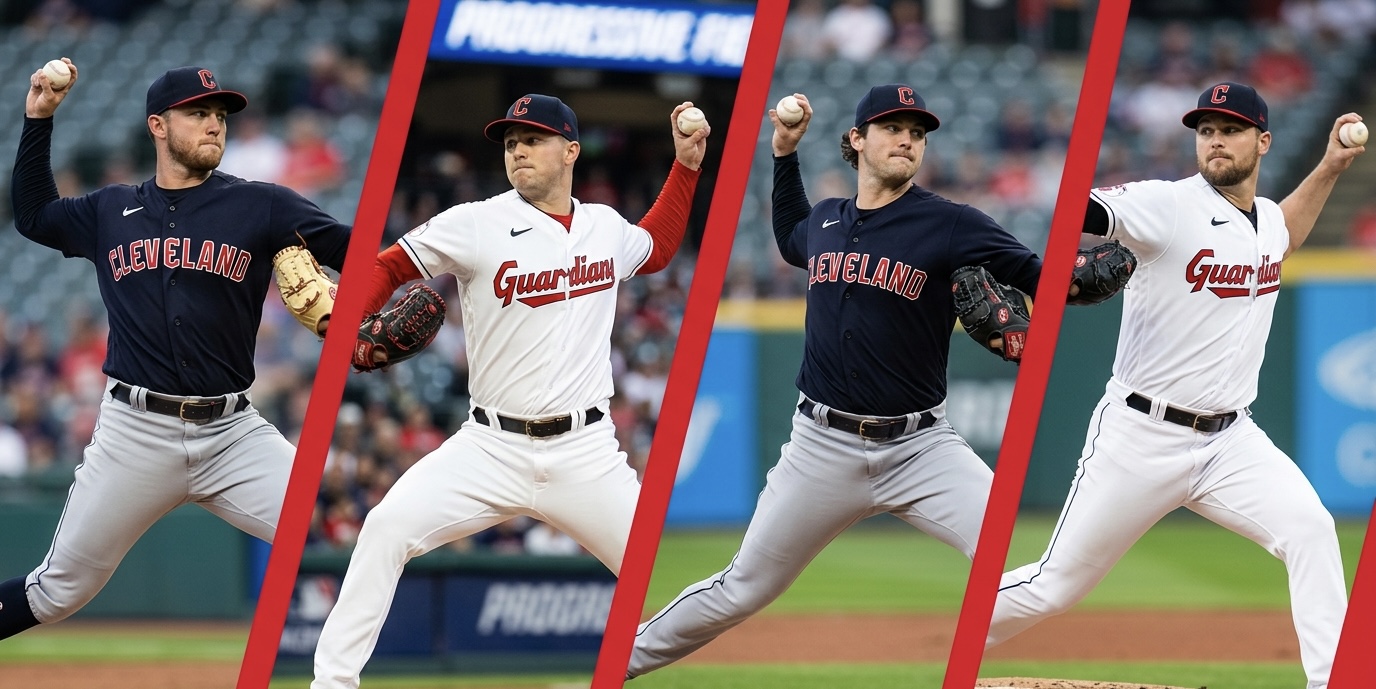
My buddy Karl and I text a lot during games. He’s back in Ohio while I’m up in BC (yes, Canada) these days, so I let him know what sucked about night games that go long, and he reminds me to get up at 7am for an early game. I jokingly call Karl an inherited friend, as he and my dad used ito do that until my father passed away in ‘19.
One of the things we talk about are stats. We’re both nerds who love math, and we like understanding the patterns. Before Bibee got his first win, we got to talking about pitch tipping, curses, leadoff home runs and first inning homers. We got stuck on the homers and Karl asked was Cleveland the worst? Nope, it was the Rangers.
Well I started thinking more and more about it. What does the big picture look like with first inning dingers?
Hardest Hit First Inning Teams
As of late June 2026, the Rangers have allowed 25 leadoff home runs to start a game. That is exactly double the amount allowed by any other team in baseball.
| Team | Total 1st Inning HRs | Home Games | Away Games |
|---|---|---|---|
| Rangers | 25 | 12 | 13 |
| Royals | 19 | 11 | 8 |
| Giants | 17 | 5 | 12 |
- Home on the Range: Nearly 43% of the first-inning home runs the Rangers have given up this season have come against the very first batter of the game.
- Five Way Tie for Fourth: Five teams have 16 first inning homers.
The Cardinals, Red Sox, White Sox, Orioles, and Diamondbacks all have 16 first inning home runs!
Tied for ninth are the Rockies and the Guards.
| Team | Total 1st Inning HRs | Home | Away |
|---|---|---|---|
| Rockies | 15 | 6 | 9 |
| Guardians | 15 | 7 | 8 |
The Guard’s Starters
Being in tenth (out of 30) isn’t terrible, but then you have to turn and look at what the hell is up with our pitchers?
| Pitcher | Total HRs | 1st Inning HRs | 1st Inning HRs (Home) | 1st Inning HRs (Away) | W/L Record | ERA |
|---|---|---|---|---|---|---|
| Tanner Bibee | 16 | 6 | 5 | 1 | 2-8 | 3.78 |
| Gavin Williams | 15 | 3 | 1 | 2 | 9-4 | 3.82 |
| Slade Cecconi | 12 | 3 | 1 | 2 | 3-6 | 4.48 |
| Joey Cantillo | 11 | 3 | 0 | 3 | 6-3 | 4.05 |
| Parker Messick | 9 | 0 | 0 | 0 | 7-4 | 2.67 |
- The First Inning Picture: As a unit, Cleveland’s starters have actually been pretty good at avoiding huge first-inning home run spikes compared to teams like Texas. They’ve allowed 15 total first-inning home runs combined across these five main starters.
- Bibee’s Tough Luck: Tanner Bibee leads the staff in home runs allowed, and his 2–8 record reflects a stretch where long balls have been particularly damaging, though his opening-frame splits are perfectly even between Progressive Field and the road.
And then you look at the June 19th game and start to wonder … is it the ‘pen?
The Bullpen Shellings
Evaluating the bullpen requires us to look at how the relievers are deployed in a different way. Relievers don’t generally pitch in the first inning, unless it’s a bullpen game (Cleveland has had none so far in 2026). Instead, we have to think about it as ‘the first inning pitched’ and ‘the first batter faced’, which is roughly analogous to the starters table.
For a reliever, a “first inning pitched” refers to the literal first inning they enter the game to pitch (anywhere between the 5th and 9th normally), rather than the 1st inning of the game. Similarly, “First batter faced homers” tracks how many home runs they surrendered to the very first hitter they saw upon entering a game.
By the Numbers
Here is the 2026 data for the main arms in the Cleveland bullpen:
| Pitcher | Total HRs | 1st Inning Pitched HRs | 1st Inning (Home) | 1st Inning (Away) | First Batter Faced | Losses Caused by HR Given Up |
| Cade Smith | 3 | 2 | 1 | 1 | 1 | 0? |
| Matt Festa | 5 | 3 | 1 | 2 | 1 | 1 |
| Connor Brogdon | 5 | 2 | 2 | 0 | 0 | 1 |
| Hunter Gaddis | 2 | 1 | 1 | 0 | 0 | 1 |
| Shawn Armstrong | 2 | 1 | 0 | 1 | 0 | 0 |
| Tim Herrin | 2 | 1 | 1 | 0 | 0 | 1 |
| Peyton Pallette | 2 | 2 | 1 | 1 | 1 | 0 |
| Erik Sabrowski | 1 | 0 | 0 | 0 | 0 | 0 |
| Colin Holderman | 1 | 1 | 0 | 1 | 0 | 0 |
- Cade Smith’s Lockdown Year: Our young Closer has been incredibly tough to take deep. He’s given up 3 dingers, all away, and only one might be? related to a loss, except we won on the blown save.
- Killer Cold Start: Out of dozens of relief appearances, the entire unit has only given up a home run to the very first batter they faced 3 times all year.
- Damage Control: Even when the bullpen has given up home runs, they rarely result in a direct team loss.
But … the Bullpen is a little more complicated.
Runners On for the ‘Pen
This next part is a little bit of philosophical finagling. A starter only has himself (and fielders) to blame for a runner on. A reliever might come on with runners on already (aka the Fireman Role) and that changes the pitchers.
I focused on workload, efficiency, and how these relievers perform when inheriting runners already on base. A start with runners on means someone started mid-inning, has a little philosophy behind it.
Stephen Vogt tends to switch pitchers mid-inning less often than the MLB average, likely due to his career as catcher. Vogter actually lets his pitchers work through trouble until they hit around 95 pitches, so while it feels like he yanks people at the first sign of trouble, the data shows he actually lets them have a solid chance!
Aside from Matt Festa (see the table below), the rest of Cleveland’s high-leverage arms are almost exclusively brought in to start a brand new frame. Across the main group of 9 relievers over the first ~75 games of the 2026 season, Vogt has only gone to the bullpen mid-inning about 48 times (roughly 0.6 times per game).
The MLB average typically sits closer to 0.8 to 1.0 mid-inning changes per game, as many managers pull hooks much faster based on batter-vs-pitcher matchups. And Vogt’s plan is actually working pretty well, with regards to home runs at least.
By the Numbers (Again)
So let’s take a look at the other side of the bullpen coin.
| Pitcher | Innings Pitched | Total HRs | Starts with Runners On | HRs with Inherited Runners | ERA |
| Cade Smith | 36.1 | 3 | 4 | 0 | 3.22 |
| Matt Festa | 32.0 | 5 | 12 | 1 | 4.22 |
| Hunter Gaddis | 22.0 | 2 | 9 | 1 | 3.68 |
| Connor Brogdon | 15.1 | 5 | 5 | 0 | 5.28 |
| Shawn Armstrong | 16.0 | 2 | 4 | 0 | 3.38 |
| Tim Herrin | 14.1 | 2 | 6 | 0 | 3.77 |
| Peyton Pallette | 12.0 | 2 | 3 | 1 | 5.25 |
| Colin Holderman | 10.2 | 1 | 2 | 0 | 2.53 |
| Erik Sabrowski | 9.1 | 1 | 3 | 0 | 1.93 |
- Smith’s Heavy Load: Closer Cade Smith leads the entire unit in innings pitched. That is a massive workload for a traditional closer by late June, and he only has a couple blown saved.
- Festa as the Fireman: Matt Festa leads the team with 12 appearances entering mid-inning with runners already on base. While he’s given up 5 homers total, he’s done a magnificent job keeping those inherited runners from scoring on long balls, allowing it just once.
These Guys Ain’t so Bad
All this means is Cleveland actually is doing pretty well when it comes to not letting up the long ball. That doesn’t seem like much, considering how bad our clutch hitting has been (and that’s a post for another off day), but it means our pitchers are keeping us in the game with playable hits.
A home run is ‘fun’ but it’s a competition between the batter and the pitcher only. No one else (except maybe the catcher) gets to do anything, and your fielders just watch it go. A non home run gives Rocchio a slide on the turf and make a brilliant play, or Watson to catch a ball he had a 3% chance to grab. A fly to left with a man on third is terrifying, but we have Kwan out there to rocket the ball in.
Cleveland’s pitching isn’t half bad at all, no matter what the ERAs are. All we need is our batters to catch up.
Leave a Reply