
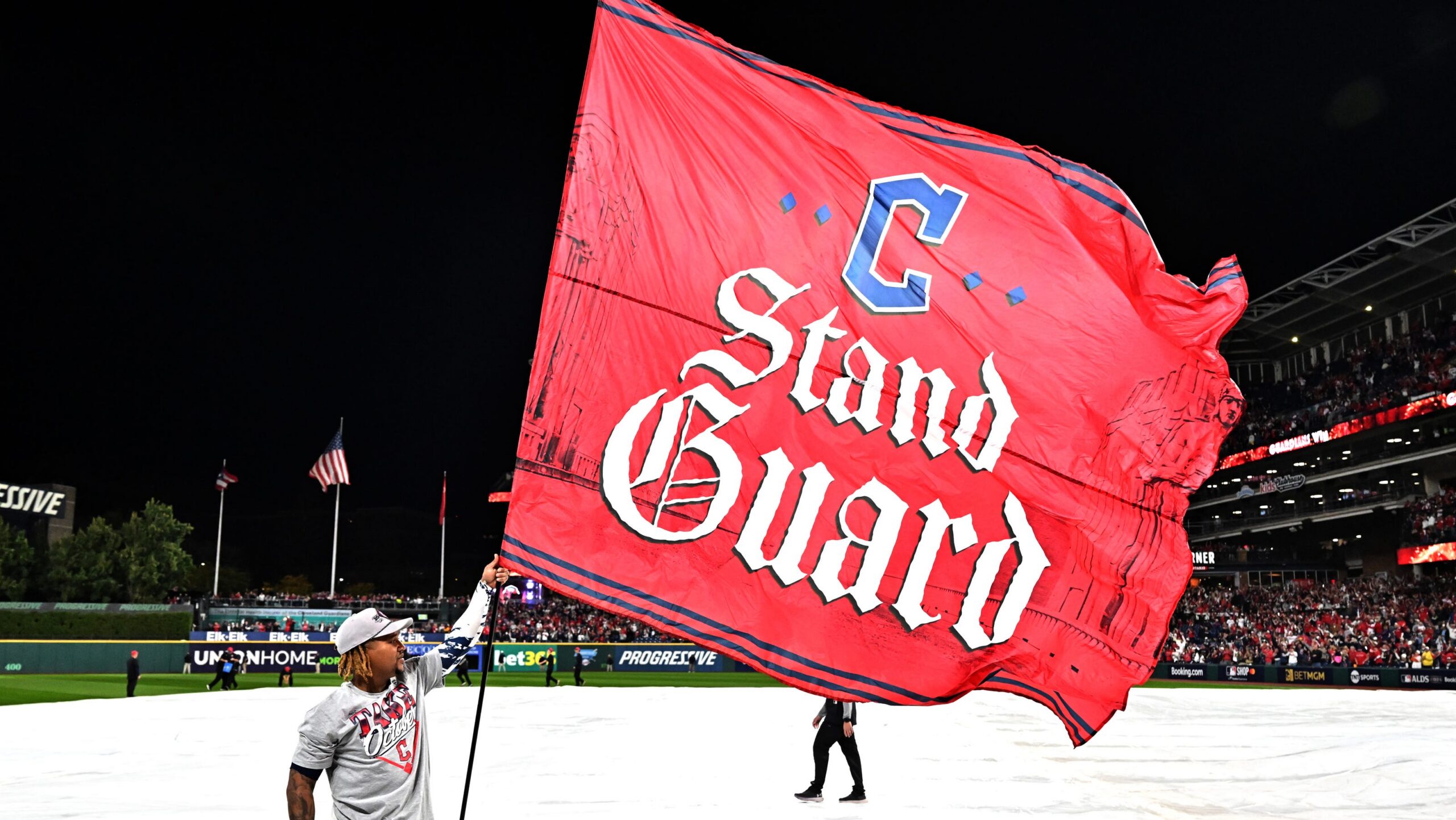
The World Series of 2026 was between two teams who had never won a World Series before. At least, they’d never won as their current franchises. While a team from Milwaukee had won before, it was the Braves (now in Atlanta) who won in 1957. Both the Tampa Bay Rays and the Milwaukee Brewers are low-budget, small-market teams. This is especially true when you compare them to the Yankees or the Dodgers.
Fundamentally, it’s these small teams that are the centre of the latest kerfluffle that might just delay the 2027 season.
Small Markets, Big Hearts
Milwaukee is a true geographic small market that punches above its weight, while Tampa Bay is a mid-sized television market that acts like an ultra-small market economically.
By strict Nielsen Designated Market Area (DMA) population, Milwaukee is the smallest media market in the MLB (smaller than Cincinnati). Their local television reach is inherently boxed in by Chicago to the south and Lake Michigan to the east. But the Brewskis outperform that market by a midwest mile. At the gate, they draw incredibly well, around 31k fans per game. They rank in the top half of MLB attendance, which allows them to hit the middle of the pack for payroll ($115-$130M a year).
In contrast, the Tampa/St. Petersburg/Sarasota area is the 15th largest in the MLB. That’s bigger than Cleveland! On paper, they’re not small market at all. But if you noticed when we fought with them for the AL Pennant, they don’t draw a lot of fans. Their venue isn’t in Tampa, but St. Pete, and draws at or near the bottom of attendance for the last 20 years. On top of that, they have the same issue as Cleveland when it comes to broadcasting drama (look up Bally’s Sports). Their payroll sits around $90M a year.
tl;dr? Milwaukee has the smallest audience in baseball but maximizes every dollar, while Tampa Bay has a solid media market that generates small-market revenue.
Size Doesn’t Matter, But Money Does
The Collective Bargaining Agreement (CBA) expires on December 1, 2026. There are three big factors in this:
- Salary Caps (and Floors) vs the Status Quo
- The fallout from the collapse of many regional cable networks
- Factoring in service time into salaries and having earlier arbitration
All three of those boil down to one simple word: Money.
No (Current) Limit on Payroll
Right now there is NO salary cap. Instead they have a Competitive Balance Tax (CBT), oft called the “luxury tax.” If a team exceeds the threshold, they pay a penalty for every extra dollar. But, pretty quickly, people figured out workarounds. For example, the Dodgers signed Shohei Ohtani to a 10-year, $700 million deal. On paper, this should be impossible under the CBT. The Dodgers … dodged the tax via deferrals.
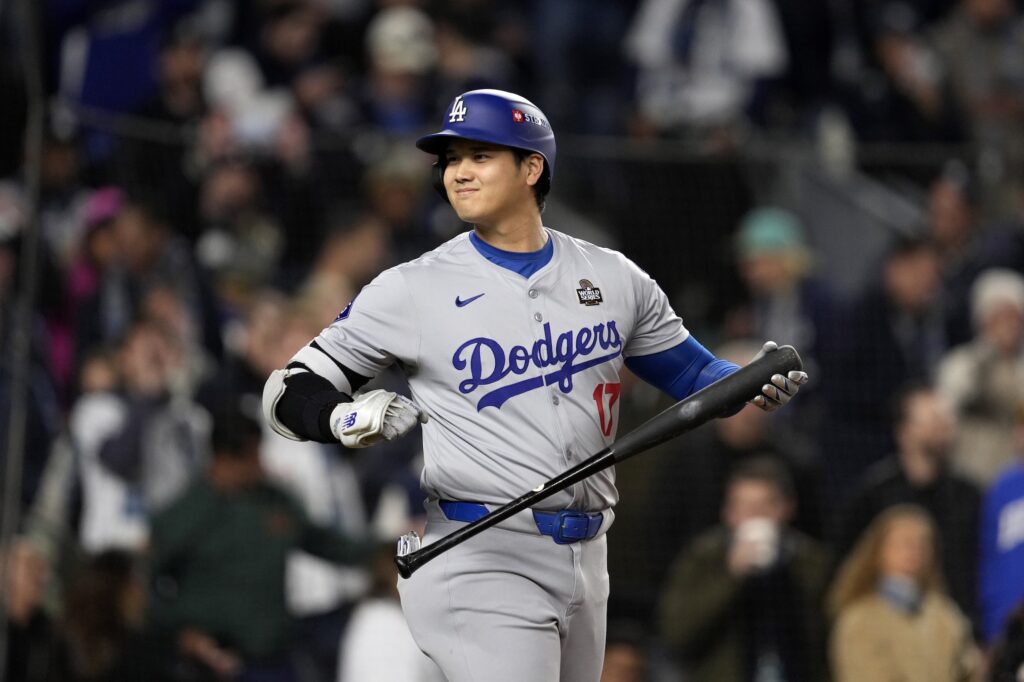
Ohtani gets $2 million a year for ten years ($20M) and the remaining $680M will be paid out from 2034 to 2043, after his playing contract ends. Since the luxury tax is based on the present day value of the money, and inflation means $68M today won’t be worth $68M in a decade, the tax figure becomes $46M (or there about). On top of that, their sleight of hand meant they could free up their cash flow to pick up Yamamoto, extend Glasnow, and keep Betts and Freeman (who also have millions deferred).
Only an ultra-wealthy franchise with massive local TV revenue and global branding can promise to cut $68 million checks per year in the 2030s without bankrupting themselves. Small-market teams view this as an end-run around the spirit of the luxury tax.
Without RSN, Teams Pay for Viewers
For the last 25 years or so, Bally Sports was a regional sports network, and they were an ATM for small and mid-market teams. Cable companies forced viewers to pay a few bucks a month to watch sports, and even if they didn’t watch baseball, the teams got money.
Cleveland was getting around $50-55M a year from Bally. When Bally’s parent group (Diamond Sports Group) went bankrupt, the MLB’s local media division stepped in. Now the MLB produces broadcasts, forcing the team into a direct-to-consumer streaming and local over-the-air model.
No longer are the Guards being paid for every cable household in Ohio. Instead, the Guards only make money when an actual baseball fan buys a subscription. That results in a significant immediate revenue drop, forcing Cleveland to run even leaner payrolls because their most reliable income stream evaporated.
Service Time, Arbitration, and Six Years
When an NFL or NBA player is drafted, they move to free agency pretty quickly. That means they get to decide how to bargain for more pay, transfer to teams they like, and grow. In the MLB, it’s six years. Actually it’s six full years, which means the player’s initial time in the league falls into two slots.
Pre-Arbitration – The first three years of a player’s contract, all the cards are held by the team. The player usually makes the league minimum (around $750-800K a year), even if they’re amazing. Win a Cy Young? Doesn’t matter. The team doesn’t have to give you a raise.
Arbitration – The last three years, the player has some leverage. If the player and team can’t agree on a one-year salary, an independent panel comes in. The panel looks at comparable players and picks either the player or the team’s offer. This is when salaries jump into the millions.
But you notice I said full years? A year is 172 days on active roster. Historically, teams keep their top prospects in the minors for the first month or so, in order to keep them under that 172 day limit. This gives them, essentially, an extra year of control. Since most players hit their peak around 25, they wind up spending their best years making the least money. And for every Aaron Judge, there’s a Steven Kwan who, let’s be real, got fucking screwed by the Guards with regards to his pay.
The Fallacy of October
Here is where I know, I just know, someone in the comments is going to chime in
Wait, if Tampa Bay and Milwaukee just made the World Series, doesn’t that prove the current system works? Why do we need a cap or a floor at all?
Don’t fall for the survivorship bias.
October baseball is a high-variance crapshoot. You’ve probably heard Vogter or Hammy or the Drunkles say that baseball is baseball, but October is a whole different beast. This is because that 162-game regular season tests depth and payroll resilience. Ending on the top of the season means a team has stamina and grit. But a short postseason series, like we had against the White Sox, rewards a hot bullpen, clutch hitting, and a ton of luck.
Just because two hyper-efficient front offices managed to thread a needle through a hurricane doesn’t mean the system is healthy. The best three teams in the AL this year were the Guards, the White Sox, and the Rays. None of them are massive money makers.
The Brewers and Rays aren’t proof the model works. If they were, the White Sox wouldn’t have had their bullpen collapse. No, they are the same as the Guardians: operational miracles.
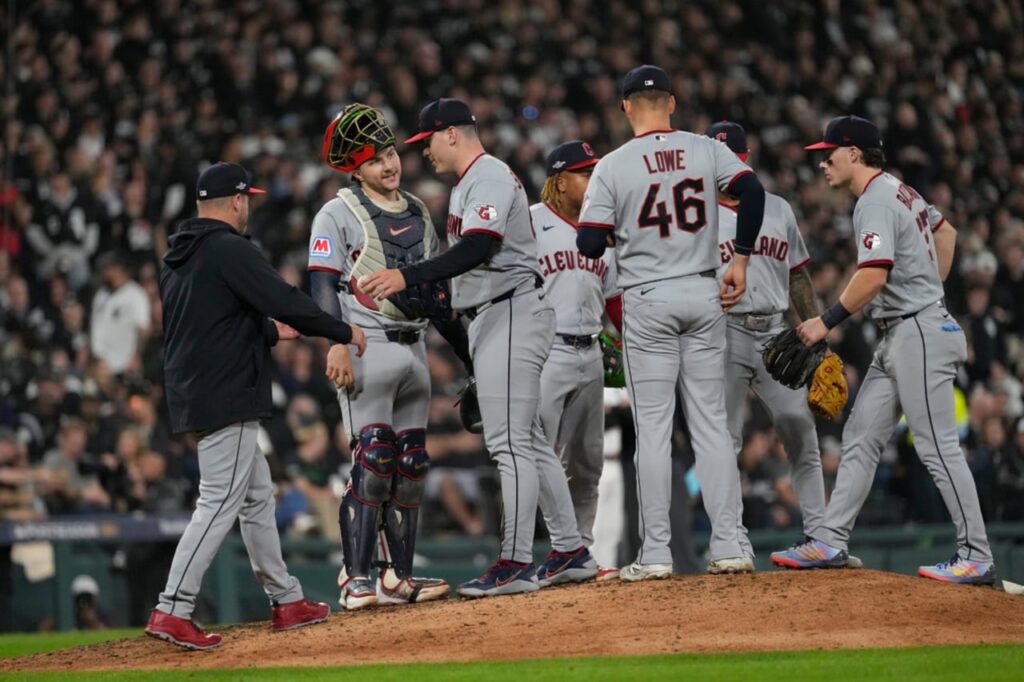
The small market heroes survived by finding elite pitchers, winning large with their draft picks, and trading away fan favourites the second they get too expensive. Remember Frankie “Mr. Smiles” Lindor? The Guards sold him with a year left because they knew there was no way in hell they could afford the $300M+ mega-deal he had waiting in the wings of free agency. The big-market behemoths can afford $200M free-agent busts; small-market teams can’t even afford a blown $15M extension.
And that brings us back to the looming December 1 deadline.
Caps and Floors
Small-market owners want a hard payroll cap to rein in the Dodgers’ deferral wizardry, alongside a salary floor to keep bottom-feeders from pocketing revenue checks without trying. The Players Association (MLBPA, also commonly called the Union), on the other hand, will strike before they ever accept a salary cap, and they’re demanding earlier arbitration so players in their mid-20s stop getting shortchanged during their physical peaks.
Now I, like many fans, have expressed a need for a Salary Floor. In a perfect world, the MLBPA should want that if there’s a cap. Right? A floor raises the minimum and forces cheap-ass owners like the Dolans to shell out. But in reality, the Owners won’t ever agree (see the aforementioned Dolan ‘frugality’) without a hard cap and guess what?
The MLBPA doesn’t want a cap!
The union believes baseball is a free market. If the Dodgers, Yankees, or Mets generate hundreds of millions in local revenue, the MLBPA argues that money belongs in the pockets of the workers producing the product, not sitting in ownership’s bank accounts. That sounds reasonable, but the MLBPA thinks that a salary cap will set a ceiling on the top talent’s earning. Therefore, a cap exists to allow owners to be cheap-asses.
To the union, a salary cap is the ultimate Trojan horse.
In leagues like the NFL or NBA, a cap ties player compensation to a strict percentage of league revenue (roughly 50/50). But to do that, you have to trust the owners’ accounting. The MLBPA has fundamentally distrusted ownership accounting since the 1980s collusion scandals. When billionaire owners can hide profits inside side businesses, parking concessions, ballpark district real estate, or local TV entities, the union sees a fixed revenue split as a direct route to getting shortchanged.
More importantly, a hard cap pits player against player. In the NFL, if a team shells out $55M a year for a franchise quarterback, middle-tier veterans get shown the door because there simply isn’t room under the ceiling. In an uncapped baseball world, Juan Soto getting $600M doesn’t legally prevent a front office from also signing an everyday middle infielder or a veteran setup man.
So the battle lines are drawn:
- The Small/Mid-Market Owners: “Put in a hard cap and floor so we don’t have to watch the Dodgers and Mets play a different sport.”
- The Union: “You make plenty of money; spend it. If you can’t afford to run an MLB franchise, sell the damn team to someone who can.”
As a small/mid market fan, I can see both sides of this one. I want the Dolans to stop being cheapskates, but I also want someone to kneecap the Yankees and Dodgers (and the Mets, if we’re being honest).
The Winter Freeze
When the clock strikes midnight on December 1, I expect the door to slam shut.
Owners will almost certainly institute an immediate lockout to freeze the hot stove, stop free agency in its tracks, and eliminate the threat of a summer player strike. We will hear months of posturing, leak-driven PR battles, and billionaire-versus-millionaire noise while free agents sit on ice.
Delays to Spring Training in February? Very possible. But actual regular-season games lost in April? That’s where the math changes.
Missing real games burns national TV money, burns gate receipts, and alienates a fanbase that is already exhausted by regional cable blackouts. The economic model is battered, but neither side is eager to jump off the cliff together.

The door is about to swing shut for the winter.
I just have to hope both sides remember how to unlock it before Opening Day.
Leave a Reply