
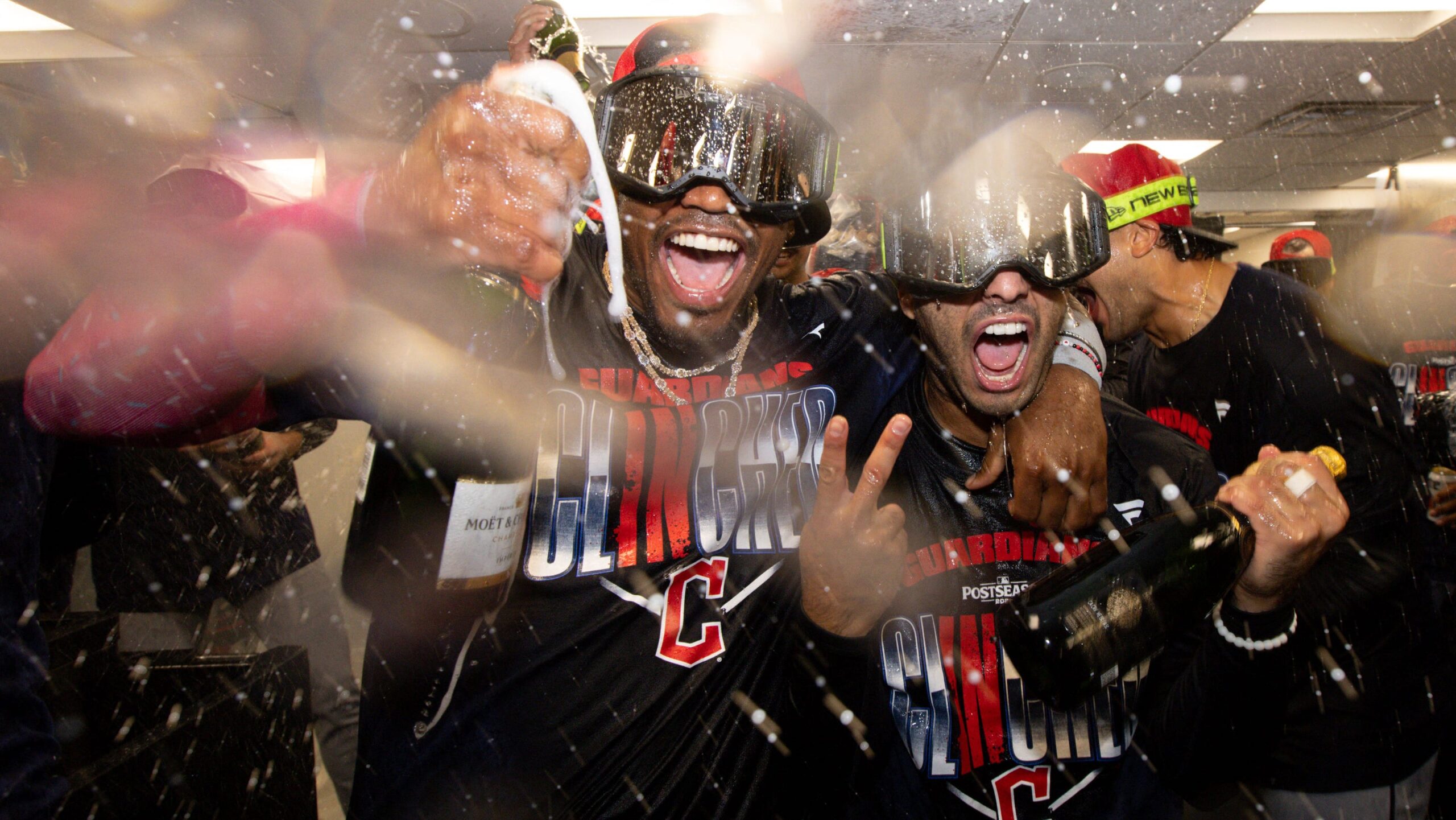
Did you know that Cleveland and the Chicago South Side boys have never played against each other in the post season? Despite sharing the AL Central division since its inception in 1994, the two rivals have never faced each other in the postseason until now. This 2026 ALDS marks the first-ever playoff meeting between the two rivals.
2026 Summary
The White Sox won the head-to-head season series 7 games to 6 out of 13 regular-season matchups:
- June 22–24 (@ Chicago):
- June 22: Guardians 5, White Sox 6
- June 23: Guardians 1, White Sox 2
- June 24: Guardians 4, White Sox 3 (10 inn.)
- July 2–5 (@ Cleveland):
- July 2: White Sox 5, Guardians 6
- July 3: White Sox 3, Guardians 4 (10 inn.)
- July 4: White Sox 3, Guardians 1
- July 5: White Sox 7, Guardians 6
- August 7–9 (@ Chicago):
- August 7: Guardians 8, White Sox 2
- August 8: Guardians 3, White Sox 6
- August 9: Guardians 3, White Sox 5
- September 14–16 (@ Cleveland):
- September 14: White Sox 7, Guardians 3
- September 15: White Sox 6, Guardians 7
- September 16: White Sox 3, Guardians 6
This was why the Guards had to win more games in the last stretch of the season. The only way to win the division was to come out ahead of the Sox.
What Stands Out?
The Guardians specialized in late-game drama, producing multiple walk-off wins against Chicago’s bullpen (including two extra-inning victories on June 24 and July 3). Key bats like José Ramírez and Petey Halpin delivered timely multi-RBI hits. In the tight single-run wins, relief arms like Sabrowski and Gaddis consistently bridged the late innings to silence middle-of-the-order threats and let Cade Smith mop up the rest.
On the other hand, the White Sox took advantage of defensive lapses and capitalized with runners in scoring position. This is evidenced by big swings from Tommy Pham, Chase Meidroth, and Randal Grichuk. The Sox held Cleveland to three runs or fewer in five of their seven victories, backed by strong performances from Hagen Smith, Anthony Kay, and a tough bullpen output that limited Cleveland’s run manufacturing.
Never Tell Me The Odds
According to FanGraphs’ projections, the Cleveland Guardians hold a 9.2% overall World Series win probability, while the Chicago White Sox sit at 3.1%. Looking at the head-to-head match odds for Game 1 at Progressive Field, Cleveland holds an estimated 58.6% winning probability compared to Chicago’s 41.4%. But to make that happen, Cleveland has some areas to work on.
Keys to The Series
There are three key aspects Cleveland has to master to win:
- Hitting with runners in scoring position
- Locking down the oppositions bats in the late innings
- Defence.
Feast or Famine Offense
Clutch hitting is currently Cleveland’s run-manufacturing style (which is terrifying as a fan). The Guardians don’t rely heavily on massive home run surges, they pressure defences by stringing together quality at-bats, moving runners over, and drawing walks. The problem? Cleveland is one of the worst teams with runners in scoring position (RISP).
The Guardians hit just .239 with RISP during the 2026 regular season, ranking near the bottom third of Major League Baseball. In situational spots, the Guards frequently struggled to make quality contact. They logged 1,271 team strikeouts across the season and often fell into empty at-bats (popping up or striking out) instead of executing productive outs like sacrifice flies or advance-grounders.
Jose Ramírez and Chase DeLauter carried a massive load. When opponents intentionally walked or pitched around Ramírez with men on second or third, the bottom half of the lineup repeatedly failed to make them pay, stranded runner after runner, and stranded Cleveland in low-scoring, nail-biter games. Cleveland repeatedly let Chicago’s starters and middle relievers off the hook when they had bases loaded or multiple runners aboard early.
Facing a White Sox pitching staff that can occasionally struggle with command, drawing out pitch counts and coming through with RISP will make or break their offensive production.
Cock Block The Sox’s Bats
While clutch hitting gets the highlights, bullpen leverage is Cleveland’s ultimate security blanket. In a short 5-game series, Stephen Vogt’s ability to shorten games with high-leverage arms like Cade Smith, Hunter Gaddis, and Tim Herrin is critical. When Cleveland wins, it’s usually because the bullpen slammed the door in the 7th, 8th, and 9th innings.
Cleveland’s bullpen remained one of the top units in the American League, carrying an elite bullpen ERA and converting late-inning leads at a high clip. That said, the bullpen did bend against the White Sox. In the 7-6 head-to-head season series, the Sox chipped away at mid-to-late relievers in tight losses. That happened most notably in Chicago’s 7-6 win on July 5 and 6-3 win on August 8, proving that any slip in execution gets punished quickly.
When the bullpen ran into turbulence, it usually came down to two specific roles: bridge guys and high-stress inheritors. Matt Festa is routinely brought into high-leverage situations with runners already on base. While his surface metrics don’t always tell the whole story, he suffered from home run volatility and inherited-runner blowups. In games where he couldn’t find his put-away strikeout pitch, his command drifted over the heart of the plate. When inheriting traffic against a disciplined White Sox lineup, those long balls and flared singles scored the inherited runners that broke open games.
The back end of the relief corps (aka the lower-leverage arms used to eat innings when starters exited early) got hit hard in mid-season slumps. In Chicago’s 7-3 and 6-3 wins, the damage occurred before getting the ball to Gaddis or Smith, exposing Cleveland’s lack of depth beyond their top 4 trust-worthy arms.
If the bullpen can prevent the White Sox from making late-game comebacks, we have a solid chance.
Solid, Reliable, Defence
And possibly most important? We need solid defence! This is especially true because Cleveland plays so many one-run, razor-thin games (as seen in the season series). Making the routine plays, keeping the outfield defence tight against Chicago’s gap hitters, and limiting extra outs on the basepaths is essential. In close postseason games, a single defensive miscue often turns into the game-winning run.
Rookie Travis Bazzana has the athletic upside, but his erratic throwing on quick relays and high-speed plays at 2B remains a work in progress. Over at third, José Ramírez’s post-hamate surgery physical limits mean high-velocity exit speeds down the line pose a challenge.
To keep Angel Martínez’s bat in the lineup, Cleveland sacrifices Petey Halpin’s high-level defence in center. This forces Steven Kwan into center field and leaves Angel navigating the tricky angles of left field. If Chicago drives balls into the gaps, Cleveland’s range gets tested heavily.
Cleveland’s defensive issues trace directly back to the left side of the infield and secondary positions. Shortstop Brayan Rocchio (12 errors) and José Ramírez (11 errors) led the team in misplays, with José clearly impacted by his post-hamate surgery recovery on high-velocity grounders. Add in rookie Travis Bazzana’s 7 errors at second base (mostly on rushed relays) and 4 outfield miscues from Angel Martínez learning left field, and Chicago has clear target zones if they put the ball in play.
Leave a Reply